Report: Kubernetes adoption across organizations (as of 2023)
Let's assess their results and feedback
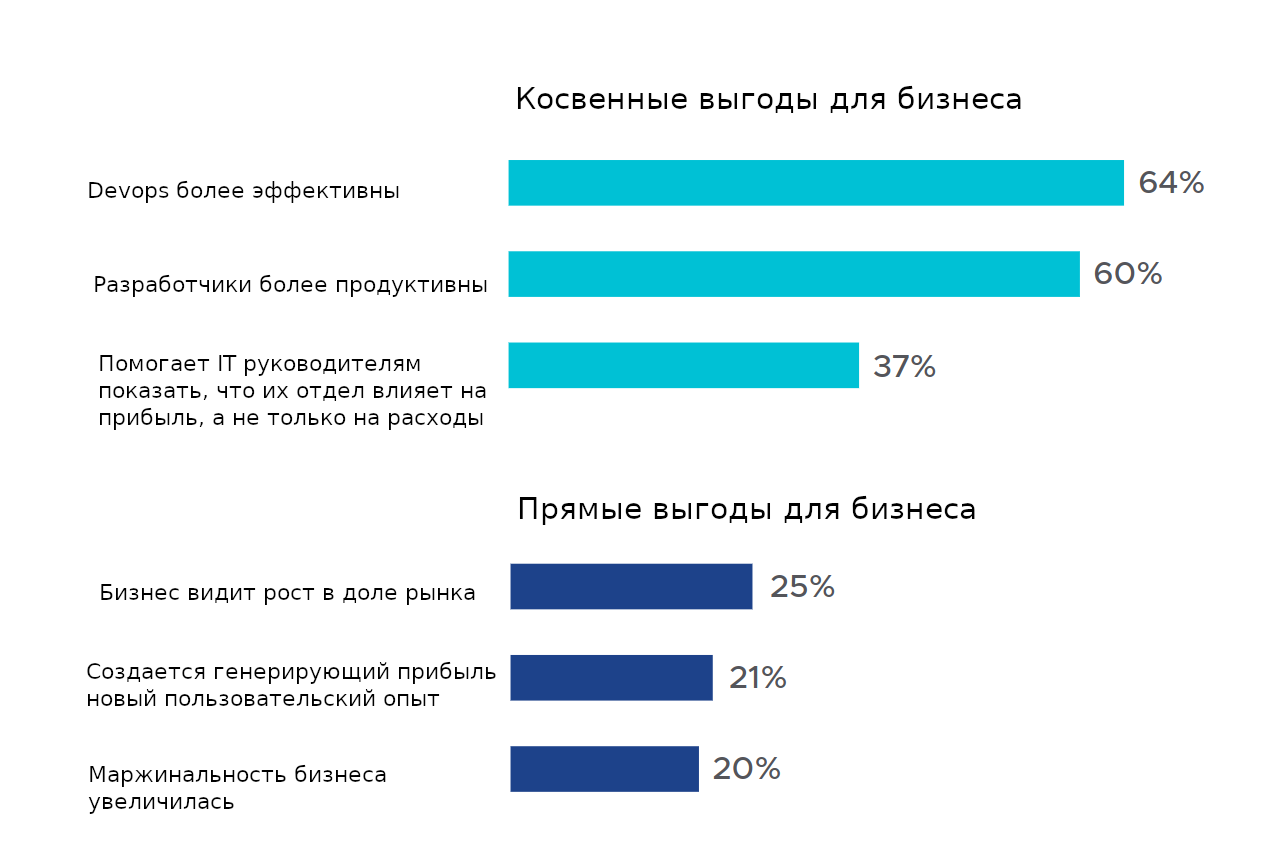
This year's report takes a more detailed look at the impact of Kubernetes on business success. Most respondents note operational benefits (98%) and business benefits (97%). Increased developer productivity (60%) and IT efficiency (64%) are widely recognized as business benefits. Many stakeholders also see a direct link between using Kubernetes and business benefits, including the business increasing its market share (25%), new customer experiences being created that drive profitability (21%), and profitability (20%) increasing.
More than three quarters of those surveyed use multiple cloud platforms, mainly to reduce vendor lock-in (53%), manage costs (45%), and expand disaster recovery and cloud backup capabilities (42%). Significant challenges have arisen around ensuring security and choosing tools for multi-platform environments. Organizations often rely on a set of different technologies, which increases overall complexity. There are substantial shifts in priorities in the areas of security and tooling as stakeholders come to grips with the realities of running Kubernetes clusters across various cloud platforms.
The benefits are seen not only in IT
Kubernetes stakeholders report that the benefits of Kubernetes and cloud-native technologies extend beyond IT. Nine out of ten (90%) agree that cloud-native technologies, including Kubernetes, are changing the way our business operates. And 91% agree that Kubernetes benefits the whole organization, not just IT. More and more teams are adopting cloud-native technologies in order to reduce costs and accelerate the pace of development — and Kubernetes delivers that.
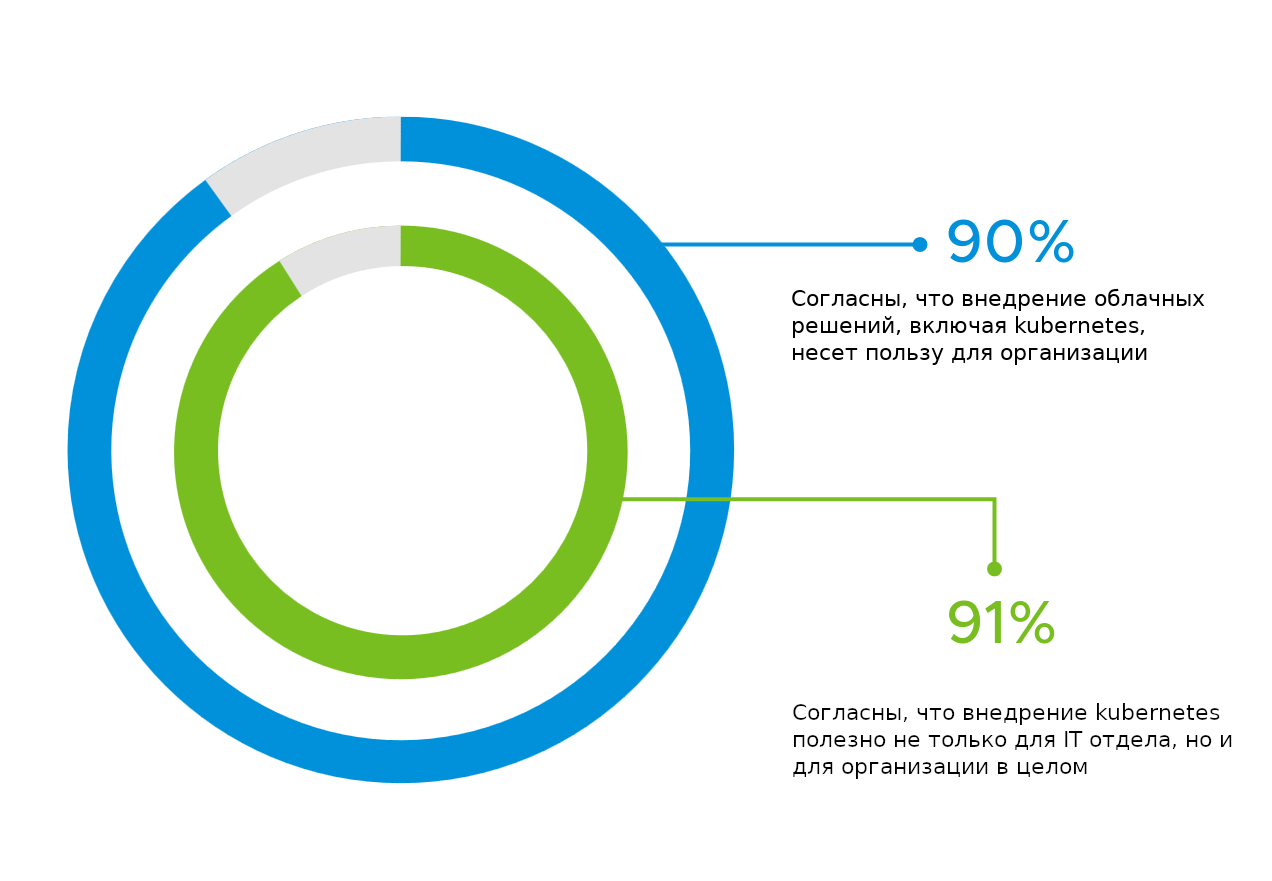
Kubernetes will deliver a number of business benefits
After a deeper analysis, the two main business benefits relate to the efficiency of operations and development teams:
- DevOps becomes more efficient (64%);
- Developers become more productive (60%).
These benefits, especially the increase in developer productivity, have a huge impact in light of today's reliance on digital technologies. Increasing developer productivity, eliminating complexity, and reducing routine tasks make it possible to reach production faster and shorten time to market, which in turn increases time to revenue. More than a third (37%) note that Kubernetes helps IT leadership demonstrate that IT is a source of revenue and not just a cost line.
Stable operational benefits
When asked about working with Kubernetes, 98% of stakeholders noted the presence of benefits. The top benefit was improved resource utilization (50%), followed by shorter software development cycles (41%). Several operational benefits related to cloud technologies are also worth noting:
- Simplifying the process of moving to the cloud (36%);
- Reducing public cloud costs (33%). Kubernetes increases the success of cloud operations and facilitates hybrid and multi-platform operations, which have become an integral part of digital business.
- Shorter development cycle (41%)
- Kick-starting the move to the cloud (36%)
- Reduced spending on cloud resources (33%)
Conclusions
The main takeaway for 2023 is that Kubernetes delivers measurable business benefits that extend beyond IT. Nine out of ten (90%) respondents agree that cloud-native technologies, including Kubernetes, are changing the way their business operates. Nearly two thirds of stakeholders note indirect business benefits, such as increased developer productivity (60%) and improved IT operator efficiency (64%). A significant number recognize direct benefits that have an immediate impact on financial results, including market share growth (25%), the creation of new customer experiences that drive revenue growth (21%), and increased profitability (20%).
As multi-platform Kubernetes use becomes the norm — 76% use multiple cloud platforms — new challenges arise. Many organizations face chaos in their cloud solutions, since a greater choice of cloud platforms leads to a significant increase in complexity. This report pays particular attention to two areas of concern: security and tool selection. In both cases, significant changes are taking place as organizations strive to become "cloud smart," developing the capabilities needed to deploy and manage any application in any cloud with efficiency and security.
One way to become "cloud smart" is to identify the distributions and tools that allow you to deploy, manage, and monitor clusters and applications across multi-platform environments with less specialization in each cloud and less manual effort. When choosing a Kubernetes distribution, stakeholders give preference to ease of use, the ability to operate in hybrid and multi-platform setups, the availability of support and services, vendor maturity, and avoiding lock-in.
Kubernetes stakeholders are increasingly willing to invest in paid support and services for mission-critical tools. The right partners can help you choose the most suitable tools for your needs and accelerate the move from cloud chaos to "smart" solutions. Look for partners who understand Kubernetes and the entire ecosystem around it and who know what it takes to build and operate modern, scalable applications.